Noah Weber · 17 September 2026
Examining Tiered Storage Architectures for Accelerated Data Retrieval in Multi-User Platforms
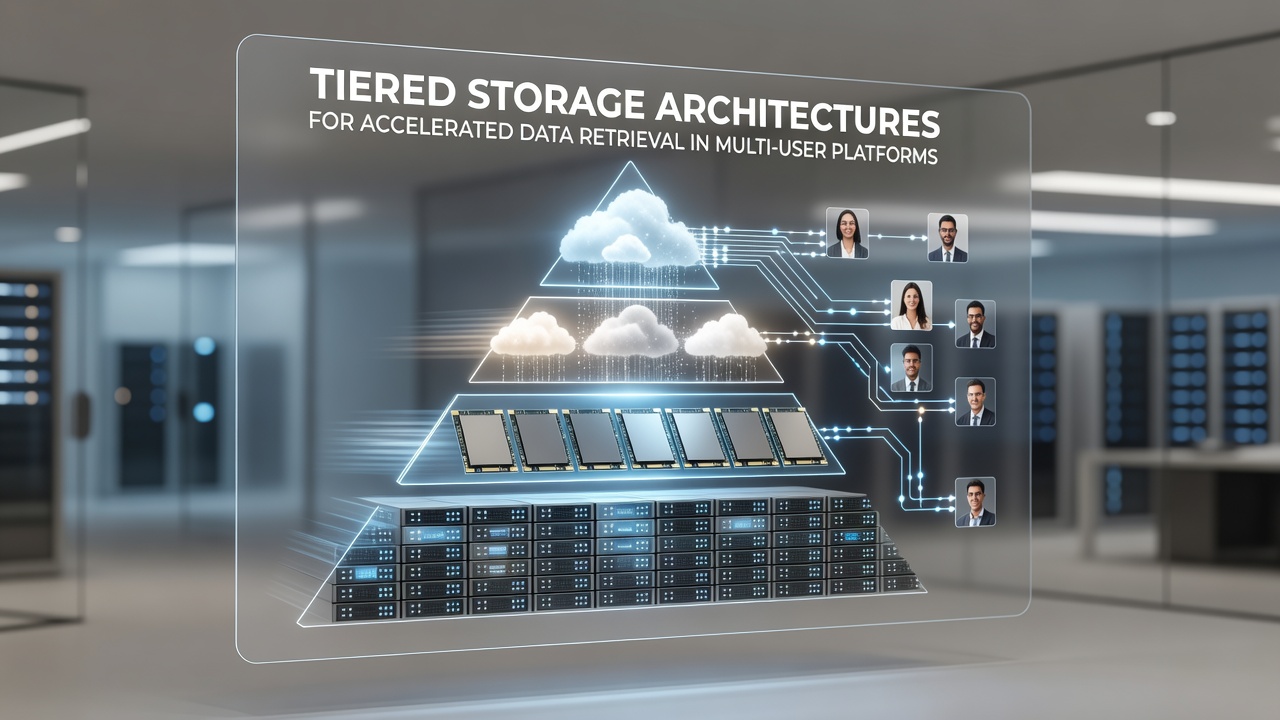
Multi-user platforms such as cloud services, collaborative databases, and enterprise applications rely on tiered storage architectures to manage vast datasets while maintaining rapid access times, and researchers have documented how these systems separate data into hot, warm, and cold categories based on access frequency and performance requirements.
Hot tiers typically use solid-state drives or in-memory caches to serve frequently requested information, whereas warm tiers employ faster hard disk drives for moderate access patterns, and cold tiers shift rarely used data to object storage or tape systems that prioritize capacity over speed, according to analyses from the Storage Networking Industry Association.
Core Components of Tiered Storage Systems
Engineers design these architectures around automated data movement policies that monitor usage patterns and migrate files between layers without manual intervention, and studies from academic institutions show that such automation reduces latency by up to 60 percent in environments handling thousands of concurrent users. Policies often incorporate metadata analysis, access logs, and predictive algorithms to decide when data should move from one tier to another, which helps maintain performance during peak loads while controlling overall infrastructure costs.
One notable implementation involves hybrid setups that combine on-premises hardware with public cloud resources, allowing organizations to keep sensitive or high-priority data local while offloading archival content to scalable remote services, and data from government technology assessments indicate that this approach supports compliance with varying regional regulations across North America and the European Union.
Performance Gains in Multi-User Scenarios
Multi-user platforms experience significant retrieval acceleration when tiered systems prioritize cache hits for active sessions, and observations from industry reports reveal that query response times drop from seconds to milliseconds once hot-tier placement aligns with user behavior patterns. Concurrent access by hundreds or thousands of users creates contention on single-layer storage, yet tiering distributes the load so that background processes handle cold data retrieval while foreground tasks operate on faster media.
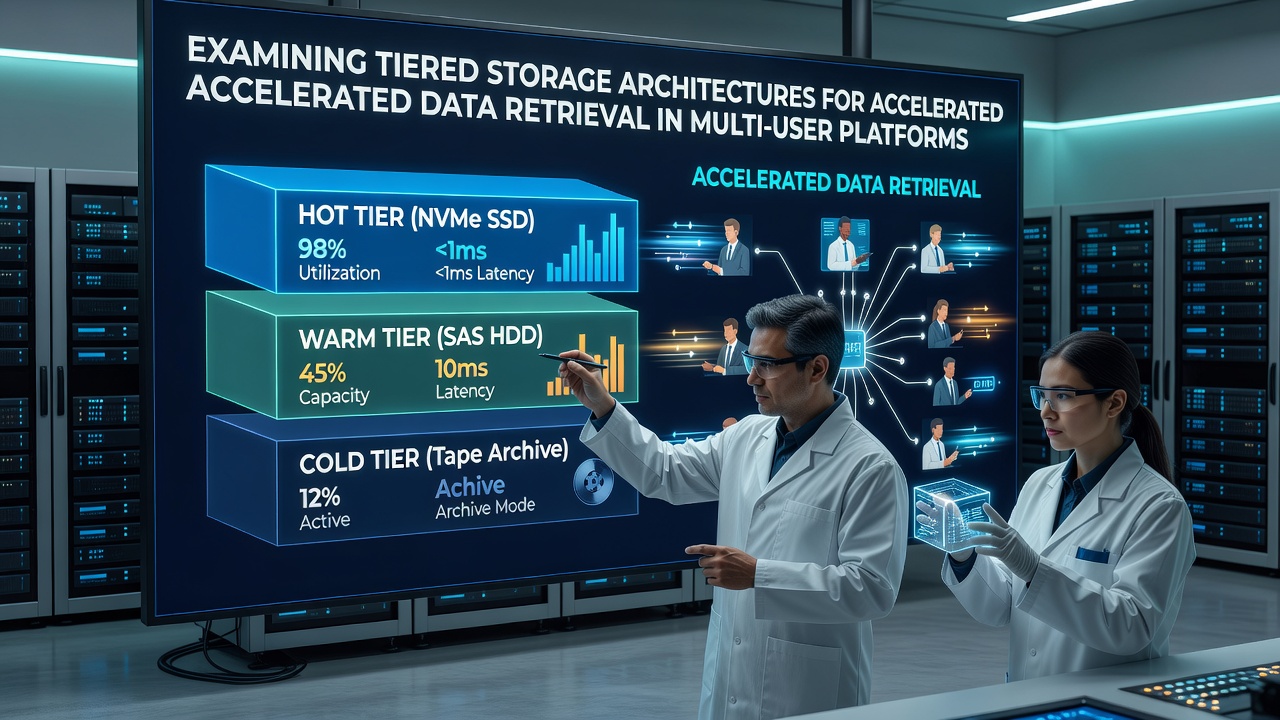
Research indicates that platforms using machine learning to forecast demand patterns achieve even higher efficiency, because the system anticipates spikes and pre-stages relevant files into warmer tiers ahead of time, and figures from a 2025 analysis by the International Data Corporation highlight average throughput improvements of 45 percent in collaborative editing tools and real-time analytics dashboards.
Implementation Challenges and Solutions
Deploying tiered architectures requires careful calibration of migration thresholds, since overly aggressive movement can increase unnecessary data transfers and network overhead, while conservative policies leave hot tiers underutilized, and experts at research institutions note that simulation tools help administrators test configurations before production rollout. Security considerations also arise when data crosses tiers that may reside in different jurisdictions, prompting the use of encryption standards and access controls that remain consistent regardless of physical location.
Integration with existing multi-user platforms often involves middleware that intercepts requests and routes them to the appropriate tier, and case studies from Canadian technology centers demonstrate successful layering atop legacy database systems without requiring full replacement of underlying infrastructure. Monitoring dashboards track hit rates, migration volumes, and latency metrics in real time, giving operators visibility into whether the architecture continues to meet performance targets as user counts grow.
Developments Expected by September 2026
By September 2026, advancements in persistent memory technologies and software-defined storage controllers are projected to blur traditional tier boundaries further, enabling finer-grained placement decisions at the block level rather than entire files, and preliminary findings from university laboratories suggest these changes could push average retrieval speeds even higher in shared environments. Industry groups continue to refine standards that facilitate interoperability between different vendor solutions, reducing vendor lock-in risks for organizations managing large-scale multi-user deployments.
Conclusion
Tiered storage architectures deliver measurable improvements in data retrieval speed for multi-user platforms through strategic placement and automated management, and continued refinement of these systems supports the growing demands of collaborative and data-intensive applications worldwide. Organizations that adopt such frameworks gain operational flexibility while maintaining the performance levels required by diverse user bases, with ongoing research providing guidance on optimization techniques and emerging hardware options.